Liberoverse
Building a tokenized digital ecosystem — where creators own their content and communities govern their platforms.
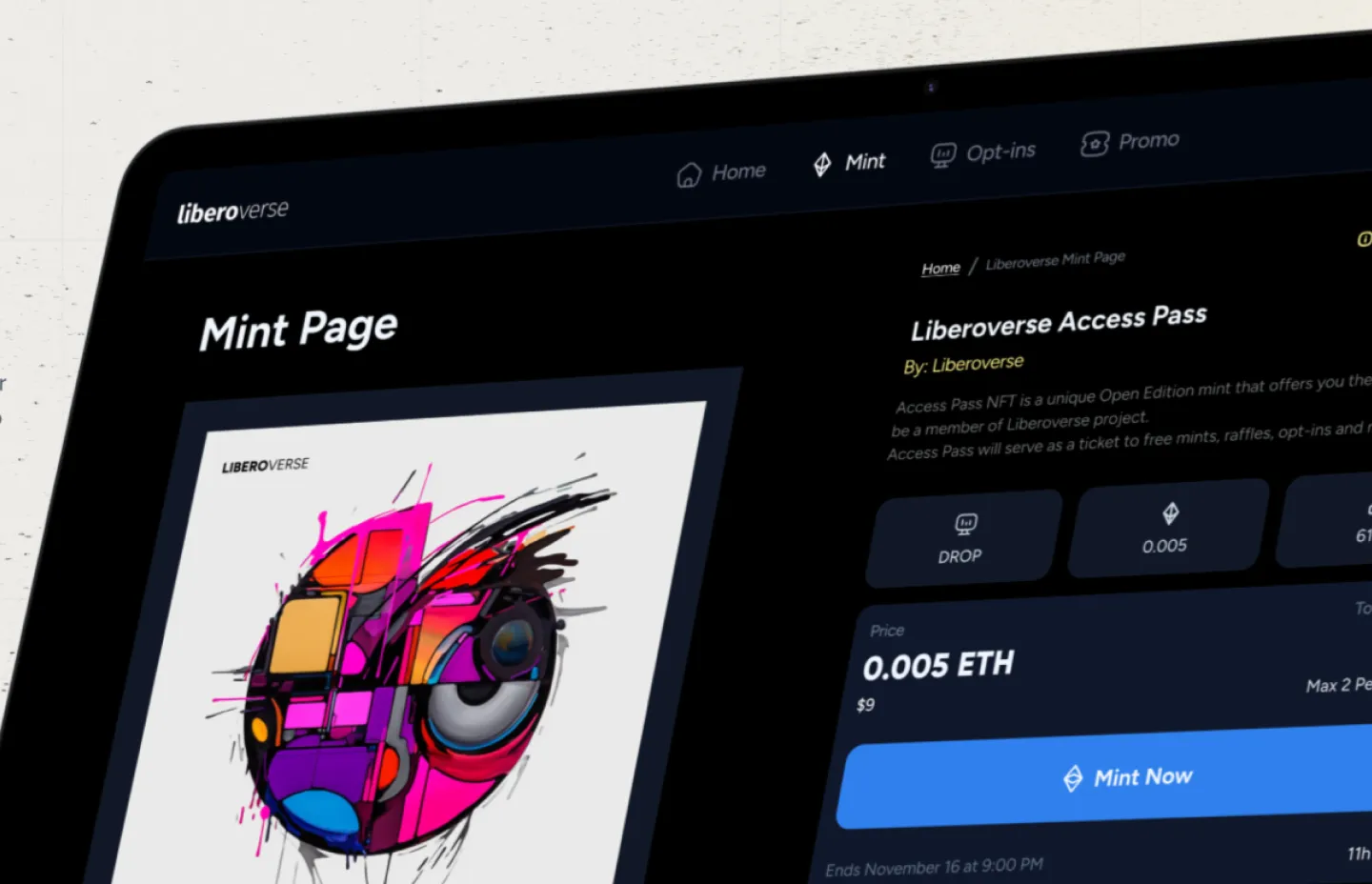
Overview
Liberoverse is a tokenized ecosystem built on a core proposition: creators own their output, communities govern their platforms. Staking, DAO voting, token-gated content, creator monetization — the product brings them together in a single, coherent experience.
The design challenge was significant. These are genuinely complex mechanics. The goal was to make them feel like product features, not protocol documentation.
The Challenge
Most Web3 platforms make one of two mistakes: they expose too much technical complexity upfront, or they hide it so thoroughly the value proposition disappears. Liberoverse needed a middle path.
A creator publishing content shouldn’t need to understand token distribution mechanics. A community member voting on a proposal shouldn’t need to decode smart contract logic. But both should understand what they’re getting — and why it’s different from every platform that came before.
The design had to carry that weight without a tutorial screen in sight.
Design Approach
The interface was structured around roles, not features. Creators land in a publishing flow that feels familiar — write, attach, publish — with token mechanics operating quietly underneath. Monetization settings surface at the point of relevance, not upfront.
Community members access governance through a dashboard that translates on-chain proposals into plain language: what’s being decided, what the outcome means, how long voting is open. The complexity of DAO mechanics collapses into a decision interface that anyone can navigate.
Token holders interact with staking through a dashboard that leads with earnings and yield — the outcome they care about — with contract details available but not prominent.
Key Decisions
Role-first information architecture. Navigation and onboarding branch by user type. Creators see creator tools. Community members see governance. The full ecosystem is reachable, but the entry point matches intent.
Progressive disclosure of Web3 mechanics. Wallets connect when needed, not on landing. Token amounts appear in context. Gas and transaction details are shown at confirmation, not scattered throughout the flow.
Readable governance. Proposal cards lead with the decision in plain language. Supporting detail expands on demand. Voting is a single action with a clear confirmation state.
Outcome
Liberoverse launched with strong creator adoption — proof that well-designed abstraction works. Complex on-chain mechanics, invisible at the surface, delivered through an experience that felt earned rather than explained.