Haas Tooling
Leading the end-to-end design of the Haas Tooling webshop — a conversion-focused e-commerce experience for industrial CNC tooling.
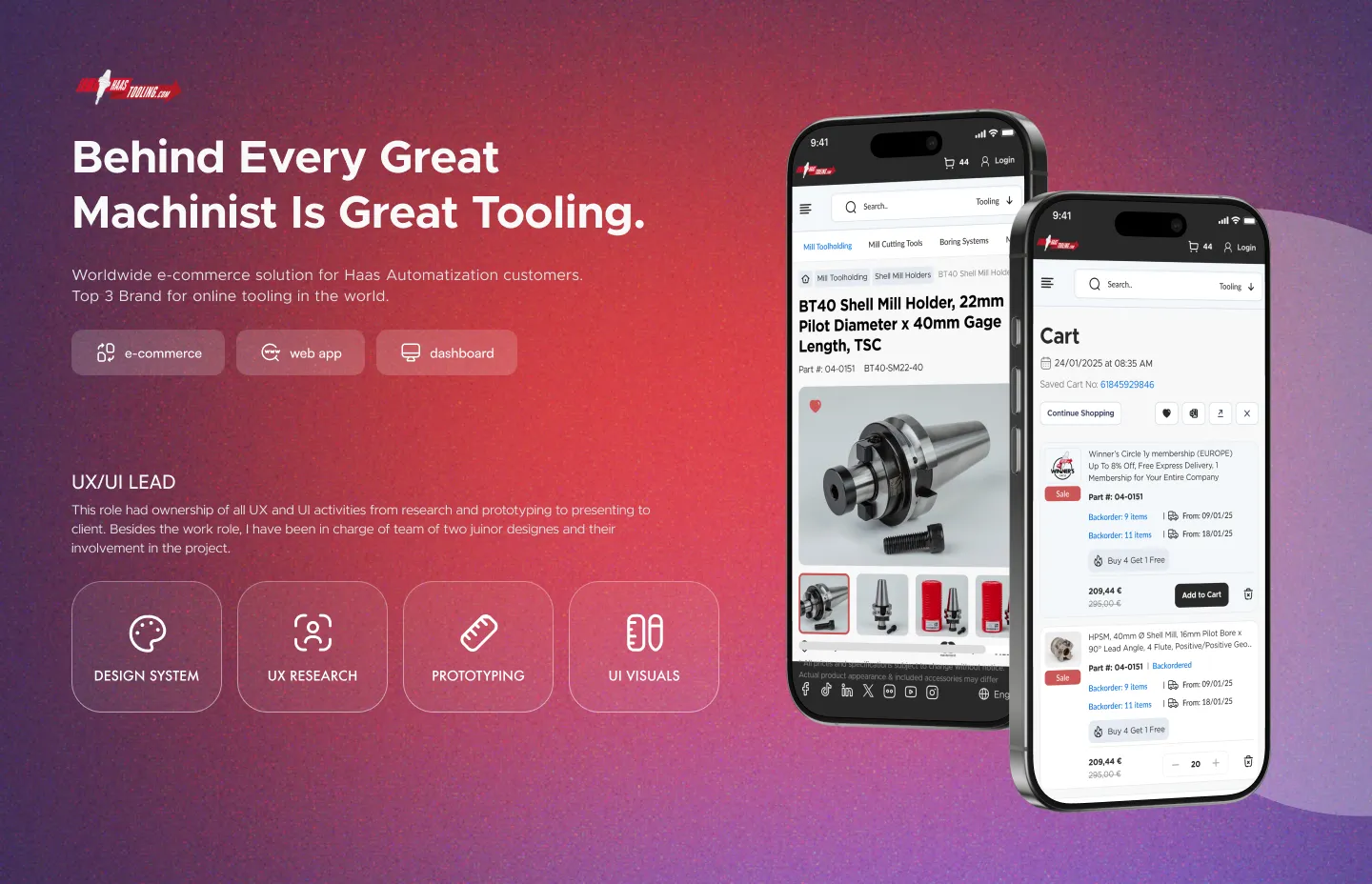
Overview
Haas Automation is one of the world’s largest manufacturers of CNC machine tools. I lead end-to-end design for their Tooling webshop — managing a small design team, running stakeholder sessions with ownership, and owning every major UX and UI decision from research through to prototype.
The brief: make industrial tooling as easy to buy online as it is to machine with.
The Challenge
Industrial e-commerce is a different discipline. The buyers are machinists, engineers, and procurement managers. They don’t browse — they specify. A product page has to surface thread pitch, cutting diameter, material compatibility, and machine compatibility without burying the purchase action.
The existing experience forced too many clicks to reach critical specifications. Users were context-switching between product pages and external datasheets. High-intent buyers were dropping off at the point they needed the most confidence.
My Role
As lead UX/UI designer, I carry full ownership of the design process — working directly with stakeholders and presenting to ownership at each major milestone.
- UX research with machinists and procurement professionals
- Information architecture and wireframes
- Full UI design across the product catalog, PDP, cart, and checkout
- Interactive prototyping for stakeholder review and user testing
Design Approach
Research uncovered the real problem: the information architecture was built for a product database, not for a buyer’s decision process. Machinists need compatibility data before anything else. Procurement teams need bulk pricing and lead times. Neither group was being served at the right moment.
The redesign restructured product pages around the buyer’s sequence of questions. Compatibility and key specifications lead. Full technical documentation is available, but it doesn’t compete with the purchase path. Cross-sell of compatible accessories is contextual — surfaced based on what’s already in the cart, not sprayed across every page.
A comprehensive design system was built from scratch: components specific to industrial product presentation, with states for technical data tables, specification comparators, and part number lookup.
Outcome
The redesigned experience reduced time-to-purchase and increased average order value through better contextual cross-selling of compatible tooling. Cleaner information hierarchy, fewer clicks to confidence — the core promise delivered.